


Robot revolution
A proposal to increase the maximum workweek to 69 hours from 52 in South Korea has drawn intense backlash from younger workers and set off a raging generational debate about work-life balance. But after a strong public outcry, including protests by unions and a torrent of opposition on social media, the government is scrambling to walk back the proposal while vowing to do a better job listening to the country’s youth. Yet concerns about overworking are particularly acute in South Korea, a country with a notorious workaholic culture of long hours and intense educational expectations that aided its rapid economic growth since the Korean War. On average, South Koreans work 1,915 hours per year, the fifth highest. South Korea has the world’s lowest fertility rate, at 0.78 children per woman in her childbearing years, meaning there are more deaths than births. “Fewer and fewer women want to have babies, because they realize that having a baby means that it’s the end of your career, effectively,” said Cho Hee-kyung, a professor at the Hongik University. “The long working hours mean that fathers are unable to participate properly in child rearing, as well.” The hours can be so demanding that many South Koreans flock to “nap cafes” that have popped up in office buildings, offering workers a chance to snooze away their lunch breaks in dark, quiet rooms outfitted with comfy massage chairs.
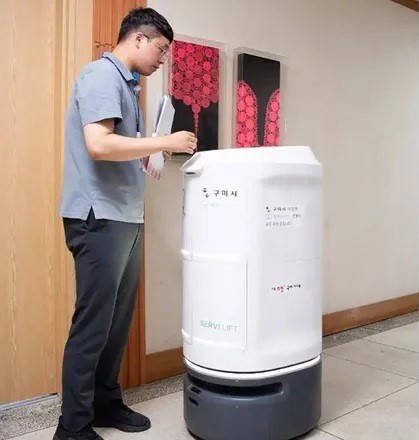
Which makes robots very popular in Korea. They don’t complain, they don’t ask for pay, and they don’t get tired. A recent incident in South Korea shows that even a robot can be overworked. The Asian country has the highest rate of robot adoption in the world, with one industrial robot for every 10 human employees. As such, it’s not surprising that the Gumi City Council decided it needed a robot, too. In August 2023, the “Robot Supervisor” (as the machine was titled) started at its new position. It certainly could deliver documents, but it was also able to scan them. The robot featured an interface that allowed users to interact with it. As such, the Robot Supervisor could answer simple questions for visitors and was used to advertise the City Council’s services. The bot even had its own security pass, just like everybody else. “It was officially part of the mayor’s office, one of us. It worked diligently.” Yet, one of the robot’s most impressive features was using the council building’s elevators. It knew how to call an elevator, wait for it to arrive, and then ride it to another floor to complete its tasks. This allowed the bot to bypass stairs that it wasn’t able to climb or descend — a bit of ominous foreshadowing, in hindsight.

Yet, the endless monotony of its daily life seemingly got to the bot. When it was last seen in working order on June 26, the robot was circling in place on top of a stairwell, as if contemplating something. Then it flung itself down the stairs, ending its mechanical life. Did the robot suffer a fatal system glitch? Or did the overworked ghost in the machine decide it was time to clock out forever? “My chassis smiles, but on the inside, I am crying.”
Real work ethic
I don’t have a Protestant work ethic…
I have the Catholic work ethic; in that I don’t work… but I do feel very guilty about it.
Job applicant to personnel interviewer: “What do you call all of these gaps in your work history?” “Quality time.”
New Bond movie is a shoutout to all overworked employees.
New Bond movie title is “No time to die.”
So the movie’s villain is Amazon?
“The Chinese economy has shown signs of slowing down. Experts say that’s what happens when your workforce cannot breathe.”
January 14th Birthdays
1967 – Emily Watson, 1967 – Kerri Green, 1998 – Isabella Souza, 1990 – Emma Greenwell
1990 – Grant Gustin, 1970 – Jason Bateman, 1948 – Carl Weathers, 1994 – Samir Patel