


EV’s for the great white, Eh?

Canadians aren’t ready for the government’s electric vehicle push. Canadians want to drive gas-powered minivans and diesel pickups. Let’s start on the showroom floor. The government is banning the sale of new gasoline and diesel-powered vehicles by 2035. In about 9 years time, Canadians will not be allowed to buy a new vehicle powered by an internal combustion engine because the government will forbid it. Canadians disagree with this. The Canadian Taxpayers Federation released Leger polling showing 59% of Canadians oppose the federal government’s ban on new gas and diesel vehicles.
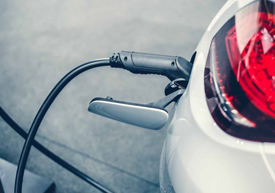
Second, Canada does not have the electrical power to fuel these battery-powered cars. The government hasn’t presented any plan to pay for the power plants, transmission lines and charging stations for these government-mandated vehicles. That leaves a big question: How much will this cost taxpayers? Canada’s vehicle transition could cost up to $300 billion by 2040 to expand the electrical grid, according to a report for Natural Resources Canada. Canada would require about 14 new atomic reactors to power all of those electric cars. Optimistically, 5 years after the mandate: 2040. Building a large nuclear reactor costs about $12.5 billion. That’s a price tag of about $175 billion just for all the power plants. The Natural Resources report estimates the transition to electric vehicles could cost up to $300 billion in total, when new charging stations and power lines are included. Who would be paying that tab? Normal Canadians through higher taxes and power bills.
Charging Infrastructure is Still Uneven -Though improving, there are still gaps especially in rural, remote, or northern parts of Ontario. Fast (Level 3/DC) chargers are less common, and in many places, chargers are Level 2 (slower). This can make long highway trips more difficult, especially in “charging cold spots.”
Winter Effects on Range & Battery Life – Cold temperatures reduce battery efficiency, meaning shorter range in winter. Heating the cabin, defrosting, etc., also draw from the battery. This means you often have to plan ahead more in cold weather or expect somewhat reduced performance in winter months.
Charging Time vs Refueling Time – Even with fast chargers, charging is slower than filling a gas tank. On‑route fast chargers may bring you to ~80% in 30‑45 minutes, but that still leaves you waiting.
Are the Pros & Cons of Electric Cars in Ontario Worth It? For many Ontarians, yes —if:
- you have good home charging capabilities (garage or driveway with access to install a charger),
- your commuting distances are moderate – daily commuting and shopping,
- you live near or drive through areas with a public charging network
In more rural provinces internal combustion vehicles are more reliable.
Electrifying Humor
Why did the electric car quit the Grand Pri early?
It had a short circuit.
What does a person with diarrhea and an electric car owner have in common?
They both hope will make it home.
Two electric car owners were seen today fighting over a charging port.
The police have said it was a charged environment and they will amp up patrols around area.
A lot of witnesses were shocked and some saw someone socket to the other.
Why did Elon name his electric car the “Tesla?”
Because “Muskmobile” didn’t pass the smell test.
August 25th Birthdays
1988 – Blake Lively, 1968 – Rachel Ray, 1970 – Claudia Schiffer, 1927 – Althea Gibson
1955 – Elvis Costello, 1933 – Tom Skerritt, 1962 – Billy Ray Cyrus, 1930 – Sean Connery