


Meet the Shark again
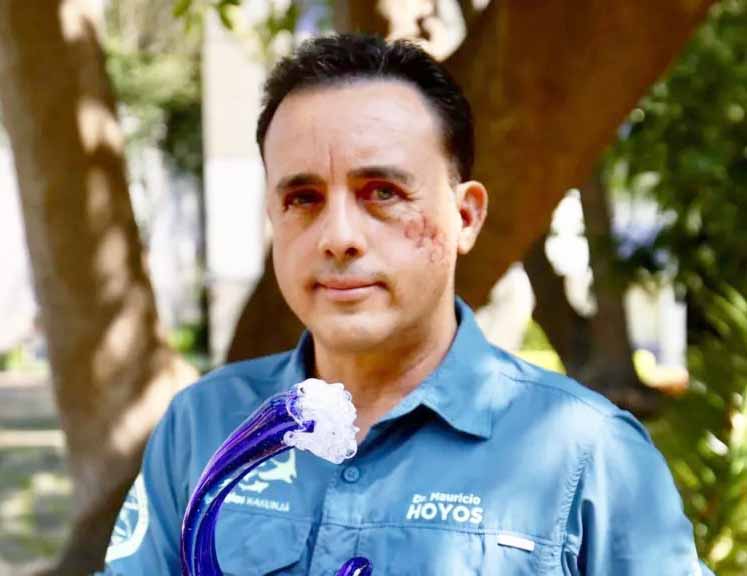
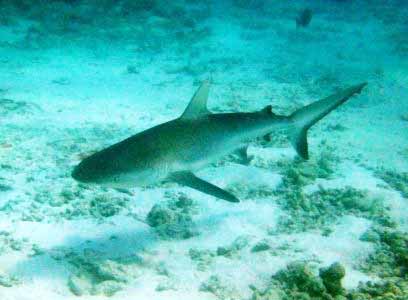
Some people are so dedicated to their jobs that a simple workplace accident will not deter them from continuing the work. In fact, they might bear the resulting scars with pride and tackle their job with renewed gusto. Mauricio Hoyos, a marine biologist, was recently on a research trip in Costa Rica. He was scuba diving to tag sharks with tracking devices when one fish decided she was having none of that. While underwater, he spotted a Galapagos shark — and it was as big as they come. “This giant female, around 11.5 feet long, swam by and headed toward the bottom, and I positioned myself to tag her at the base of her dorsal fin,” recalled Maurico. And that’s what he did. With a routine developed over 30 years of job experience, he gave the shark a stylish piercing in its dorsal fin to attach the tracker probe. “Unlike the other sharks I’ve tagged that immediately flee, she turns around and stares at me. I saw her little eye looking at me, and I saw her very calmly turning around,” said Hoyos. Ever so slowly, the shark started swimming away — but that was just a feint. In the blink of an eye, it twisted around and dashed toward Maurico. He felt the massive impact of the marine beast crashing into his body. And then its jaws clamped down around his head.
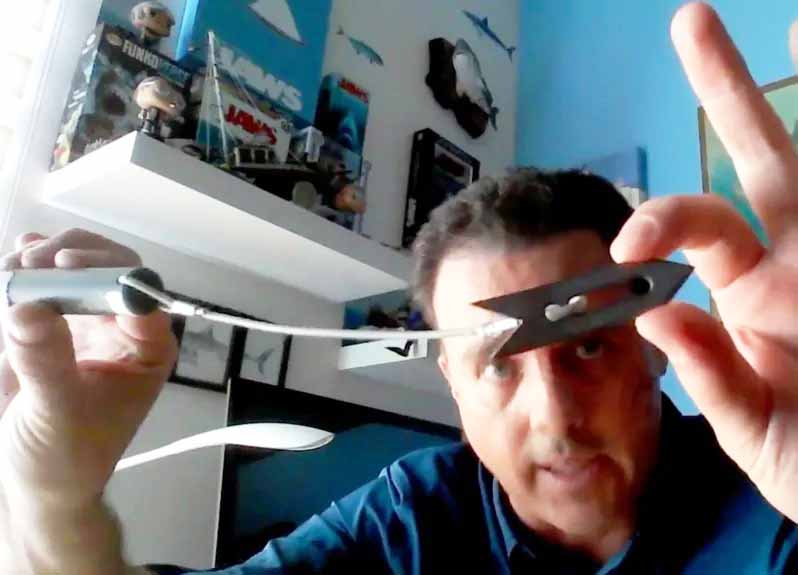
“I lowered my head, and what I felt was its lower jaw digging into my cheek and its upper jaw into my head. When it closed it, I felt the pressure of the bite,” Maurico said. Lucky for him, the shark wasn’t really out for blood, and it quickly released Hoyos. Translating from shark to English, she told him to get lost before she changes her mind. The bite had severed the oxygen line of his breathing apparatus. “When I realized that no air was coming out of the hose, I grabbed a second one we have, but then I realized that the regulator wasn’t working and was blowing air instead of regulating it, so I had to remember my training and start regulating it with my lips,” explained Maurico. “Since I couldn’t see anything, what I did was look for the light that I knew was the surface. I started swimming upwards, in a very coordinated manner, because I wanted to avoid erratic movements that would attract the shark,” he said.
Fortunately, Hoyos found the surface and popped up. “The doctors told me it was amazing: after I had a 34-hour trip, they performed a surgical debridement [removing damaged tissue], and two days later they were already evaluating whether they could perform reconstructive surgery.” Shark bites are infamous for causing infections that can be life-threatening. Yet, Hoyos bounced back so quickly he left his doctors stupefied. “They told me my recovery had been incredible.” Maurico now sports scars on his face that look like gills. And he hopes he can show them off to the cranky lady that gave them to him. Hoyos already has his next research trip to the area where the shark attack happened booked for January 2026. Of course, he will be diving to tag more sharks. “This animal spared my life.”
Shark bites
What did the shark say when he ate the clownfish?
It tastes a bit funny.
What does a shark call a jet-skier?
Fast food.
Arguing with strangers online is like wrestling sharks.
Even if you win, it was a really stupid thing to do.
Why do sharks have teeth?
For eating porpoises.
December 2nd Birthdays
1984 – Daniella Ruha, 1967 – Lucie Liu, 1981 – Brittany Spears, 1944 – Kathy Lee Crosby
1989 – Alfred Enoch, 1983 – Aaron Rodgers, 1981 – Jo Lo Truglio, 1946 – Gianna Versace