


See They’re back…
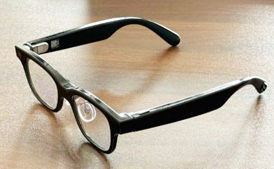
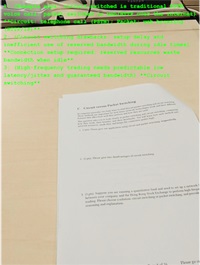
Remember Google Glass? If not, I can’t blame you. It was a short-lived, futuristic device in the mid-2010s that was supposed to integrate a computer into eyeglasses, allowing you to perform searches and such wherever you went. Google Glass died, partially because the technology just wasn’t there yet. Now, it is – and that’s becoming a problem for China’s universities. Chinese university applicants are increasingly using AI-equipped eyeglasses to cheat their way through colleges’ entrance and regular exams. The glasses are nearly indistinguishable from regular, non-smart ones, especially at the distances most college lecturers see them from. With the AI glasses, the students can easily waltz their way through exams as the glasses provide answers for them. If the proctors aren’t on the lookout for the telltale signs of AI-glass use, they’ll be none the wiser. However, not every attempt at cheating has been successful, and with every caught student, the universities are coming up with new ways to detect the glasses. Still, the things are so popular that they’ve spawned an entire rental industry leasing AI glasses to college students.
AI glasses aren’t all that complicated, and their operating principle is pretty simple. The glass frame is equipped with a tiny camera that sees what the wearer sees. It can scan the text or object in front of the glasses and then perform appropriate searches over the internet. The device then feeds the results into a display integrated into the eye lenses. However, the AI glasses are not foolproof. There are some signs proctors can keep an eye out for that give the devices away. First, although the computer parts used in the glasses are impressively teeny-tiny, the glasses are still bulkier and heavier than regular eyeglasses. Recently, teachers busted a student at the South China Agricultural University for attempting to cheat in an exam with AI glasses. The student had certainly been cautious, as he had turned the glasses into silent mode and covered the LED light of the camera. However, the proctors noticed that his lenses shone green when viewed from certain angles.

But what we’re dealing with today with AI wearables is “much worse,” Glenn Beck says. “You are trading the right to be misunderstood in private now,” he says, pointing to CNN.“Every conversation you will ever have will be indexed and searchable … and it will be sitting on a server owned by a company with lawyers who work for the company.” Despite the devastating blows to privacy and consent, Meta CEO Mark Zuckerberg’s pitch for AI-powered smart glasses, he explains, has essentially been: “Wear it, or fall behind.” Right now, the risk of declining AI wearables is low, but a day is coming soon when life will become nearly impossible without them. “Two years from now, when your team’s meeting has notes, action items, performance reviews, and they’re all running off transcripts, declining won’t be a preference any more,” he warns. Now “it’s a problem; it’s you being difficult. Nobody will forbid you. They’ll just build the office around the assumption and let the cost fall on the holdout: you.”
Better living with Eyeglasses
You should respect people who wear glasses.
They paid money to see you.
He took my glasses off and said, “without your glasses, why your beautiful.”
I said, “without my glasses, you’re not half bad either.”
I wear my wife’s eyeglasses because she wants me to see things her way.
Guess who I bumped into on my way to get my glasses fixed?
Everybody.
August 19th Birthdays
1953 – Mary Matalin, 1965 – Kyra Sedgwick, 1984 – Tammin Sursak, 1986 – Christina Perri
1964 – John Stamos, 1946 – Bill Clinton, 1989 – Kirk Cousins, 1942 – Fred Thompson